Toward the end of 2023, I was approached to translate Roberta Recchia’s debut novel All That is Left of Life. The book was still a few months away from publication in Italy, and Recchia’s name wasn’t on anyone’s radar yet, so receiving the manuscript felt a little like being let in on a secret. Intrigued, I agreed to read it over the holidays.
Menjelang akhir tahun 2023, saya diminta untuk menerjemahkan novel debut Roberta Recchia All That is Left of Life. Buku itu masih beberapa bulan lagi sebelum diterbitkan di Italia, dan nama Recchia belum ada pada radar siapa pun, jadi menerima naskah itu terasa sedikit seperti diajak tahu sebuah rahasia. Karena tertarik, saya setuju membacanya selama liburan.
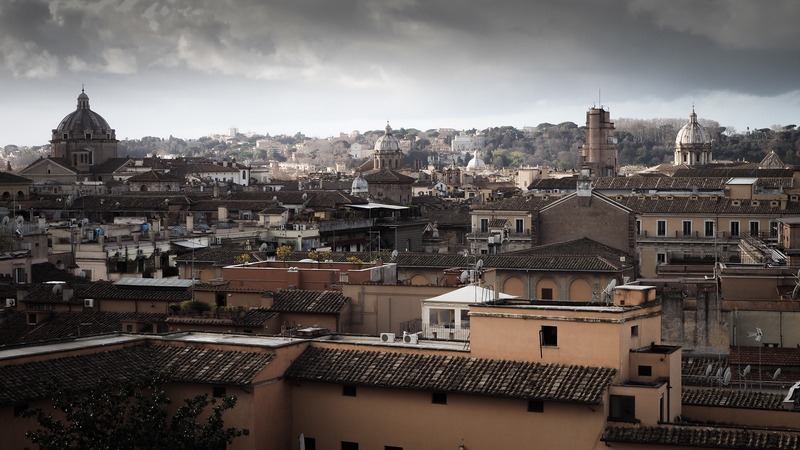
Set in and around Rome during the 1980s, All That is Left of Life is a choral novel that follows three generations of the Ansaldo family as they grapple with the aftermath of Betta’s murder at just sixteen. It’s the peak of summer, and Betta and her cousin Miriam sneak out of the house one night to go to a bonfire party on the beach, but only Miriam makes it back home alive. Marisa and Stelvio, Betta’s parents, are plunged into the emotional mayhem of their senseless loss, but it is Miriam who carries the heaviest burden as she hides from everyone that she, too, was on the beach that night.
Berlatih di dalam dan sekitar Roma pada tahun 1980-an, All That is Left of Life adalah novel paduan suara yang mengikuti tiga generasi keluarga Ansaldo saat mereka bergulat dengan dampak pembunuhan Betta yang usianya baru enam belas tahun. Itu adalah puncak musim panas, dan Betta bersama sepupunya Miriam keluar diam-diam dari rumah satu malam untuk menghadiri pesta api unggun di pantai, tetapi hanya Miriam yang berhasil pulang selamat. Marisa dan Stelvio, orang tua Betta, tenggelam dalam kekacauan emosional akibat kehilangan yang tidak masuk akal, tetapi Miriam yang memikul beban terberat karena ia bersembunyi dari semua orang bahwa ia juga berada di pantai malam itu.
When the memory of the violence becomes too difficult to bear, she turns to the sweet oblivion of drugs and quickly develops an addiction. Only when she hits rock bottom does she cross paths with Leo, a small-time drug dealer who will prove to be her salvation. With a story arc that spans three decades and a cast of unforgettable characters, All That is Left of Life took Italy by storm and, with over 200,000 copies sold domestically so far, it’s still on the bestseller list two and a half years after its original publication.
Ketika ingatan mengenai kekerasan itu menjadi terlalu berat untuk ditanggung, ia beralih ke amnesia manis narkoba dan dengan cepat menjadi kecanduan. Hanya ketika ia menemui titik nadir, ia bertemu Leo, seorang pengedar narkoba kelas kecil yang akan terbukti menjadi keselamatannya. Dengan alur cerita yang melintasi tiga dekade dan serangkaian tokoh yang tak terlupakan, All That is Left of Life melanda Italia dan, dengan lebih dari 200.000 salinan terjual di dalam negeri hingga saat ini, buku ini masih bertahan di daftar buku terlaris dua setengah tahun setelah publikasinya.
All That is Left of Life is a virtuoso study of how different people respond to grief and trauma, ultimately finding ways to overcome what feels like it should be impossible to overcome.
All That is Left of Life adalah studi virtuos tentang bagaimana berbagai orang merespons duka dan trauma, akhirnya menemukan cara untuk mengatasi apa yang terasa seolah-olah tidak mungkin untuk diatasi.
One of my most vivid memories of my time with All That is Left of Life is not a translation memory at all, but of reading it for the very first time. I was in the middle seat, flanked by total strangers, flying back to Italy for Christmas, full of the anticipation and tension that going home at that time of year always stirs, and there I was—crying my eyes out over Marisa’s grief. I was only about a quarter of the way in (those who’ve read the book will know the exact passage), but I already knew that I wanted to translate the novel. I finished it the following day, and it took all the professionalism I could muster not to write to the commissioning editor on Christmas Day to say that I was in.
Salah satu kenangan paling hidup selama bekerja dengan All That is Left of Life bukanlah memori terjemahan sama sekali, tetapi membacanya untuk pertama kalinya. Saya berada di kursi tengah, dikelilingi orang asing total, terbang kembali ke Italia untuk Natal, penuh dengan antisipasi dan ketegangan yang selalu muncul saat pulang pada waktu itu, dan di sanalah saya—menangis sesungguhnya karena kesedihan Marisa. Saya baru sekitar seperempat jalan (mereka yang telah membaca buku ini akan mengetahui bagian persisnya), tetapi saya sudah tahu bahwa saya ingin menerjemahkan novel ini. Saya menyelesaikannya keesokan harinya, dan diperlukan seluruh profesionalisme yang bisa saya himpun agar tidak menulis kepada editor penugasan pada Hari Natal untuk mengatakan bahwa saya sudah masuk.
All That is Left of Life is a virtuoso study of how different people respond to grief and trauma, ultimately finding ways to overcome what feels like it should be impossible to overcome. The excerpt on Lit Hub, which comes immediately after Marisa’s pietà-like scene that still makes me cry inconsolably, is a wonderful example of Roberta Recchia’s craft: in fewer than a thousand words, we witness the reactions to the murder from Betta’s closest family, the police, and the town at large. New characters are introduced, many interesting details are offered, yet the narration never loses its focus, every sentence adding to the characters’ mounting sense of powerlessness in the face of such a tragic death. This was one of the biggest challenges I had to face—translations “physiologically” tend to expand, but for me it was very important to keep the tautness of Recchia’s propulsive storytelling intact.
All That is Left of Life adalah studi virtuos tentang bagaimana berbagai orang merespons duka dan trauma, akhirnya menemukan cara untuk mengatasi apa yang terasa seperti tidak mungkin diatasi. Kutipan di Lit Hub, yang muncul tepat setelah adegan mirip pietà Marisa yang masih membuat saya menangis tak dapat ditenangkan, adalah contoh luar biasa dari keterampilan Roberta Recchia: dalam kurang dari seribu kata, kita menyaksikan reaksi terhadap pembunuhan dari keluarga terdekat Betta, polisi, dan kota secara luas. Karakter baru diperkenalkan, banyak detail menarik ditawarkan, tetapi narasi tidak pernah kehilangan fokusnya, setiap kalimat menambah perasaan ketidakberdayaan tokoh menghadapi kematian yang begitu tragis. Ini adalah salah satu tantangan terbesar yang harus saya hadapi—terjemahan “fisiologis” cenderung melebar, tetapi bagi saya sangat penting untuk menjaga ketegangan penceritaan Recchia yang mendorong tetap utuh.
This was my second full-length translation, and it taught me many important lessons about my own process. It was by working on it that I learned that, for me, the first draft is really just a fact-finding mission about the challenges that each book is going to throw my way, and that those problems will only find their solutions over the course of many drafts, as the tone and the voice of the novel in English hopefully crystallize into a coherent whole.
Ini adalah terjemahan panjang penuh kedua saya, dan itu mengajarkan saya banyak pelajaran penting tentang proses saya sendiri. Justru dengan mengerjakannya saya belajar bahwa, bagi saya, draf pertama sebenarnya hanyalah misi pencarian fakta tentang tantangan yang akan dilemparkan setiap buku terhadap saya, dan masalah-masalah itu hanya akan menemukan solusinya melalui banyak draf, seiring nada dan suara novel dalam bahasa Inggris akhirnya mengkristal menjadi satu kesatuan yang koheren.
Readers might think that once all the words are on the page, the translation is basically done, and the translator only needs to go through it once or twice to make sure that everything reads well. That might be the case for other translators—we are all different and work in different ways!—but for me, a first draft is just a chance to slow down and really read the book, and that is especially important in a pacy page-turner like All That is Left of Life, where appreciation for the more delicate nuances can be overlooked in our yearning to know what happens next.
Para pembaca mungkin berpikir bahwa begitu semua kata tertulis di halaman, terjemahan pada dasarnya selesai, dan penerjemah hanya perlu membacanya sekali atau dua kali untuk memastikan semuanya terbaca dengan baik. Itu mungkin terjadi untuk penerjemah lain—kita semua berbeda dan bekerja dengan cara yang berbeda!—tetapi bagi saya, draf pertama hanyalah kesempatan untuk memperlambat tempo dan membaca buku ini dengan benar, dan itu sangat penting terutama pada sebuah novel yang cepat mengalir seperti All That is Left of Life, di mana apresiasi terhadap nuansa yang lebih halus bisa terabaikan dalam keinginan kita untuk tahu apa yang terjadi selanjutnya.
Translations “physiologically” tend to expand, but for me it was very important to keep the tautness of Recchia’s propulsive storytelling intact.
Terjemahan secara “fisik” cenderung mengembang, tetapi bagi saya sangat penting menjaga ketegangan alur penceritaan Recchia yang mendorong tetap utuh.
On finishing my first draft, I realized that I could implicitly trust the novel’s unstoppable drive forward to render well in English, and that it was the small details that I had to pay most attention to instead: the word-level repetitions from one chapter to the next that shape the characters into existence, the details of a tiny gesture or expression that speak volumes to the emotional landscape of the protagonists, the connotations of social class and privilege in the dialogue that reveal the speakers’ implicit biases. Thanks to this focus, and over my many re-readings and drafts, I’ve come to love some minor scenes in the book perhaps more than its pivotal plot points: Stelvio and Marisa in the dairy, Leo in the library, Marisa’s jealousy of Maria Grazia…On a first read, All That is Left of Life tears your heart apart with its sweeping emotions, but its true grace is in the balance it achieves between big, choral moments and smaller, more intimate ones.
Setelah menyelesaikan draf pertamaku, aku menyadari bahwa aku secara implisit bisa mempercayai dorongan buku ini yang tak terhentikan untuk menghasilkan terjemahan bahasa Inggris yang baik, dan bahwa detail-detail kecil yang perlu mendapat perhatian paling besar: pengulangan kata dari satu bab ke bab berikutnya yang membentuk karakter menjadi eksistensi, rincian gerakan kecil atau ekspresi yang berbicara banyak tentang lanskap emosional para protagonis, konotasi kelas sosial dan hak istimewa dalam dialog yang mengungkap bias implisit pembicara. Berkat fokus ini, dan melalui banyak pembacaan ulang dan draf, aku mulai menyukai beberapa adegan kecil dalam buku ini mungkin lebih daripada momen-momen plot utamanya: Stelvio dan Marisa di pabrik susu, Leo di perpustakaan, kecemburuan Marisa terhadap Maria Grazia…Pada pembacaan pertama, All That is Left of Life menghancurkan hatimu dengan emosinya yang luas, tetapi keindahannya sejati terletak pada keseimbangan antara momen besar bertembang koor dan yang lebih kecil serta lebih intim.
All That is Left of Life came out in Italy while I was still elbow-deep in its inner workings, and watching its first readers react to it was thrilling, as well as filling me with a sense of responsibility towards a book that it soon became clear was going to be a smashing success. With this novel, Roberta Recchia has earned an army of die-hard fans: booksellers keep recommending it, book clubs love it, social media is abuzz, and word-of-mouth is as strong as ever. Recchia’s second novel, Io che ti ho voluto così bene (I, who loved you so much), came out in Italy last year. I don’t want to say too much about it, but readers who have loved All That is Left of Life will be interested to know that it revisits some of the same events from the perspectives of a different set of characters. I am so excited that readers in North America, too, now have the chance to read one of Italy’s biggest publishing successes of recent years, and so honored to have had the privilege of acting as the go-between.
All That is Left of Life terbit di Italia ketika saya masih tenggelam dalam seluk-beluknya, dan melihat pembaca pertamanya bereaksi terhadapnya sungguh menggembirakan, sekaligus membuat saya merasa bertanggung jawab terhadap buku yang segera menjadi jelas akan sukses besar. Dengan novel ini, Roberta Recchia telah mendapatkan pasukan penggemar setia: para pengecer buku terus merekomendasikannya, klub buku menyukainya, media sosial ramai, dan mulut ke mulut tetap kuat. Novel kedua Recchia, Io che ti ho voluto così bene (Aku, yang sangat mencintaimu), terbit di Italia tahun lalu. Saya tidak ingin mengatakan terlalu banyak tentangnya, tetapi pembaca yang menyukai All That is Left of Life akan tertarik mengetahui bahwa ia mengulang beberapa peristiwa yang sama dari perspektif sekelompok karakter yang berbeda. Saya sangat senang bahwa pembaca di Amerika Utara juga sekarang memiliki kesempatan untuk membaca salah satu keberhasilan penerbitan terbesar Italia dalam beberapa tahun terakhir, dan begitu terhormat telah menjadi perantara.
_______________________________
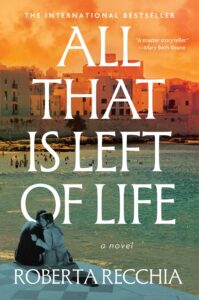
All That Is Left of Life by Roberta Recchia, translated by Antonella Lettieri, is available from Scribner, an imprint of Simon & Schuster.
All That Is Left of Life karya Roberta Recchia, diterjemahkan oleh Antonella Lettieri, tersedia dari Scribner, imprint dari Simon & Schuster.