One day they were in love and the next, a manuscript appeared in his study, written in a language she didn’t speak.
Ix-Xmara Mżerżqa.
The papers were flopping off the edge of his desk, trembling in the breeze from the window; her hand reached out to stop them. He did this with dishes too, slid a plate onto the counter so it jutted off the side, asking to be wrecked. She liked putting things to rights. Putting something to rights was an untranslatable phrase, he might say in a pedantic mood. No, she would think; you could come pretty close in a Romance language. Mettere a posto, to put in place. She figured that a lover who hung the moon was actually untranslatable, but neither of them believed that of each other anymore.
A blue jay at the feeder warned off finches with a curdling squawk. May was already hot in Chicago. Leonie swiveled in his chair, its kittenish squeak a sound she associated with deep thought. He’d said he was working on another translation for Edizioni Sur, but she knew her way around Italian, and this was gibberish. “Eesh shmara mazurka.”
“Im-zer-zuh.” Max stood in the doorway, looking past her to the soap opera of the bird feeder. “Sloping, or curvy. Or bent.” He came for her neck, his fingers tapping at the corded veins, twisting the webs of her hair. She still had the creases from sleep on her skin, while he had been up and into the world and back, already returning to work. “Seed’s almost out.”
“How was Herschel?” A former professor often took him to breakfast to exercise her rusty flirting. She picked up the bill, and told him if she were younger she would dance him into the river. What does that mean? they’d ask each other later. Is it a Slavic expression? Herschel was not American, and her students made a game of guessing her roots. She’d engineered all of Max’s gigs.
“I filled the feeder last,” he said.
“This is the story you tell yourself,” she said, holding on to the arms of his chair, “that you go out and exercise your wits and I stay home and avoid chores.”
“It’s just situational.”
That wasn’t quite the word, but it’s the word he used. Temporary, she would’ve said, or even provisional. She was between assignments, is what he meant. It left her feeling impotent, also feminine; it wasn’t a position she liked.
“There are two sides to every story,” he’d said in a recent fight.
She’d shaken her head. “Two sides means there are two stories.”
“Im-zer-zuh,” he repeated, and slid the manuscript out from beneath her hand, throwing it in a desk drawer. “Put on some pants. Let’s make lunch.”
*
In the shower that afternoon, Leonie copied the sounds in her mouth again. Im-zer-zuh. Eesh shmara. Her fingers dug in her scalp. She cleaned out her ears. Her belly button. When she leaned down to scrub between her toes, she encountered the cat, who sat on the side of the tub to catch the spray. Its whiskers were dewy. She felt a quick pang on her left side. Which side was appendicitis?
She and Max had separate apartments, though she spent most of her time at his; he had the bird feeder and the cat and solid wood bookshelves. He was almost a decade older than her, and seemed like it. More stable, more deliberate, qualities she’d once found sexy: the slow way he’d turn his eyes on her as she fluttered about some new project. But in the past year, more often than not, he seemed to be looking through her. He was the first to turn off his bedside lamp; he was ready, before her, to say good night.
The cat blinked. Max never sat on a ledge and watched her soap her body.
They were two adults on two paths, pretending they were on one. At this point—early thirties, partnered, in a semblance of a career—Leonie could coast, writing travel guides to familiar places until the internet finished sinking her industry, but the path Max was walking, the taste of im-zer-zuh on her tongue, sparked envy. Max went into unintelligible caves and came out with light.
She dug her fingers into her lower abdomen, trying to work out the pang, now a knot. The cat rubbed its gray face with a white paw.
“You have no ambition,” Leonie said to it, squeezing the soap out of her hair.
*
When the cat snaked past the bathroom door, it looked for Max first in his main perch, the swiveling desk chair. Empty. Right turn, left turn, and the cat found Max in an unusual sprawl on the bed, his outstretched arms covering the well-worn blanket where the cat was accustomed to nap. Max was not napping.
He was thinking about Herschel’s proposition—a month on the island of Malta, in the company of a poet on the verge of international fame, with nothing to do but massage one language into another. No student essays, no leaky windows, no meetings, no dishes, no Leonie.
Why hadn’t he seized her by the nape this morning, when he found her at his desk, and taken her to bed? How could he still be self-conscious about his body around hers after four years? He touched her half as often as he considered it. The cat leapt to the blanket and began kneading. Max scraped his fingers along its spine. Leonie would probably say he rarely thought about her, but when he wasn’t thinking about words, she was the only other subject. Her soft face in sleep, her loud banging of cabinets, her socks tossed haphazardly behind doors and under shelves. She was a fixture in a life a forty-year-old person should have. But fixture was not a romantic word.
Of course he should take the job. Then return to her, then take another job, then—He should feel lucky the bonds of their commitment were so loose.
The pummeling of the shower stopped. The cat rolled over, belly up. It wasn’t an offer but a trap; he knew better than to scratch there.
“You have no shame,” Max said to it, rolling off the bed and straightening the pillows.
*
Max claimed to have an aversion to real tomato sauce, though when Leonie made it, the kitchen ripe with butter and onion, he quietly went back for seconds. “I could show you how,” she’d once said. But his mother had made spaghetti with sauce from a jar, so when he cooked, he used Ragú Old World Style, and Leonie said nothing but heaved in red pepper flakes. Neither admitted how “Old World Style” rang alarm bells in their heads, heads that had been trained to see language as a code, a veil, or a ruse.
“I think for this one I’m going to travel.” He mopped red from the corner of his mouth. “For a time.”
“The gibberish poet?”
“A few weeks. Three.”
She cocked her head. “You did all of Dufrénoy from home.”
“Dufrénoy was dead.”
She pushed her chair back from the table and reached out for his empty dish. He toyed with it for a few seconds before shoving it over. In those seconds a number of things could’ve happened, even a détente resulting in lovemaking, but nothing did. They used to read romance novels aloud to each other in bed, mocking and blushing and then, what the hell, trying things out. Then morning would come, with all the banalities that drew them apart. Even bodies in perfect consummation have to get detangled.
When they’d met they both crisscrossed the globe with frequency, playing time zones like piano keys. He could be gone for weeks with only an occasional check-in: Landed at CDG. Send dirty pic. But jobs they thought would lead past the horizon turned out to be feasible from behind a desk. His freelance translations had turned into teaching jobs. He adapted to corduroy.
She started running the water in the sink to get it hot. He’d left the empty pot over low heat; bits of tomato had burnt into a crust.
“How soon do you leave?” she said at the same time he said, “Come with me.”
The plates came clean easy, but she’d leave the pot to soak. She stood by the stove with the dish towel across her shoulder.
“We could rent a place,” he said. “With a terrace.”
“You won’t even tell me what the project is.”
“Żgur ma nafx,” he said. “Or għadni ma nafx. I don’t know; I don’t know yet.”
“Remember, it’s not helpful when I can’t understand you.”
“It’s a job from Herschel.”
She looked over the counters, dry and white, and flicked off the overhead switch. Only a lamp lit him from the side; he looked like something out of Orson Welles.
He said, “When we move together, I feel faster.”
“When we move together,” she said, “I get ignored and you get diarrhea.”
*
At a bar on the western coast of Sicily four years earlier, Max and Leonie had been seated at nearby tables and heard something suspicious in each other’s accents. “I mean, your Italian’s good,” he’d said in his opening gambit, “but not, you know, autentico.”
Americans in Trapani.
She’d been working on the revised entry for the Aegadian Islands, which—her editor said—needed to include more tuna, less cave art. Spinder’s Guides were recalibrating away from colonialist tourism, toward duck-blind tourism: let’s sit at a distance and watch the natives, but with a Negroni. Physical guides didn’t sell the way they used to, so the whole office was learning how to compete with personal blogs. Her editor had gingerly asked if she could take some selfies in Sicily.
On the lapping shores, she’d written, accompanied by a shot of her toes on the beach, and her editor had marked, “Water laps, not land?”
From any crest on Favignana you can smell the fish being bled on the coast below, their bodies hung upside down like hogs. “Too much?” wrote her editor.
After they’d traded a few playful remarks, and with the courage of the solo traveler, she’d told Max across two tables that she wasn’t interested in overseas affairs.
“Business affairs?”
“Les liaisons amoureuses,” she said, attempting mystery.
“They can understand you.”
And indeed, a well-dressed couple beneath a nearby umbrella smiled behind their menus. In this rare case the man took the woman at her word, and left her alone. He finished his coffee and nodded, and she nodded, and while she felt that this exchange was deliciously romantic, he felt he’d failed at something. They didn’t see each other again in Sicily.
*
Not far from Sicily, around the year Max was born, a painter threw a tube of viridian at a window. He thought the window was closed—he wanted a smash, a violent splatter to match his mood—but a maid had left the window open to air out the artist’s musk, and the oil paint sailed straight through. Manwel heard the gentle rustle of a hedge accepting the tube.
“Lala,” his wife called out from the garden below. “You dropped something.” She spoke Maltese with a Ligurian accent, making declarative statements sound like songs.
Like Leonie, Manwel felt feminized, impotent. Unlike Leonie, he was over two hundred and fifty pounds, or nearly a qantar and a half, using the old Maltese measuring system that no one bothered with anymore. His name was vestigial too: Manwel knew businessmen who had become Manuels, but he kept the w.
He smeared a thumb against the canvas, registering his dissatisfaction there instead. He’d been invited to show at a major gallery at the end of summer, but his current works were all wrong. A stack of sketches on the floor kept tripping him as he paced. He was a man in his forties, virile, his skin softened only by the black pelt that ran up his arms and around his back. He needed a painting that roared.
“Lala,” his wife called again, like a finch. “Lunch.”
__________________________________
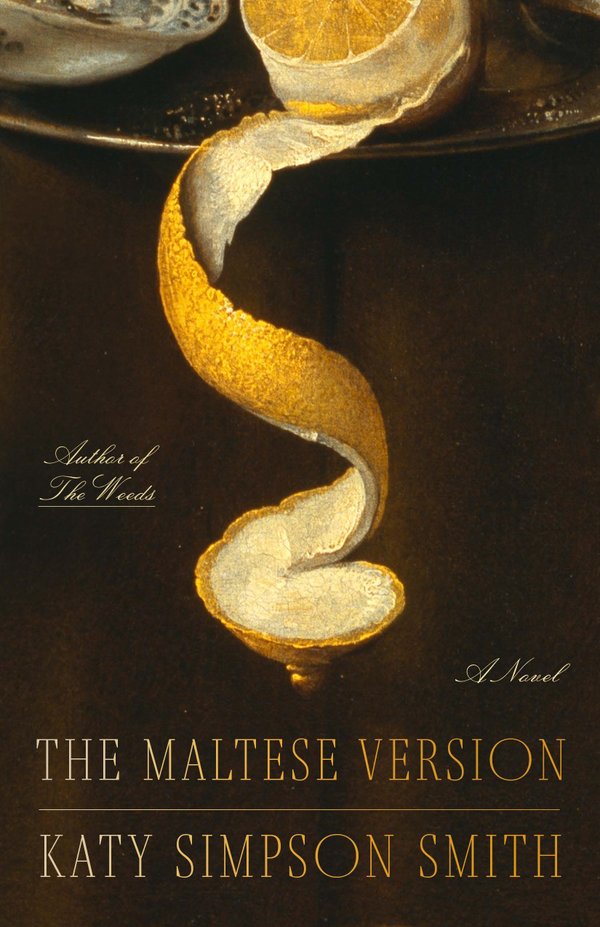
Dari The Maltese Version karya Katy Simpson Smith. Diterbitkan oleh FSG Originals, Agustus 2026. Hak Cipta © 2026 milik Katy Simpson Smith. Semua hak dilindungi.